
Visual Theology – Understanding the Rapture
The Visual Theology charts are designed to help you see the structure and movement of Scripture. They highlight patterns, contrasts, and developments that are often difficult to hold together when reading line by line.
These charts show the structure of the argument. The accompanying articles develop each part in full.
This approach follows a long tradition of visual teaching in the Church. The well-known charts of Clarence Larkin helped many grasp the broad outline of Scripture. In the same spirit, these charts aim to make visible what the Word of God is revealing.
Charts and teaching notes for the book of Understanding the Rapture. Select a chart below to view the image and article.
Click chart to view larger
From the teaching in: Grace to Glory
How This Hope Transforms Our Lives Now
How the Blessed Hope Transforms Us
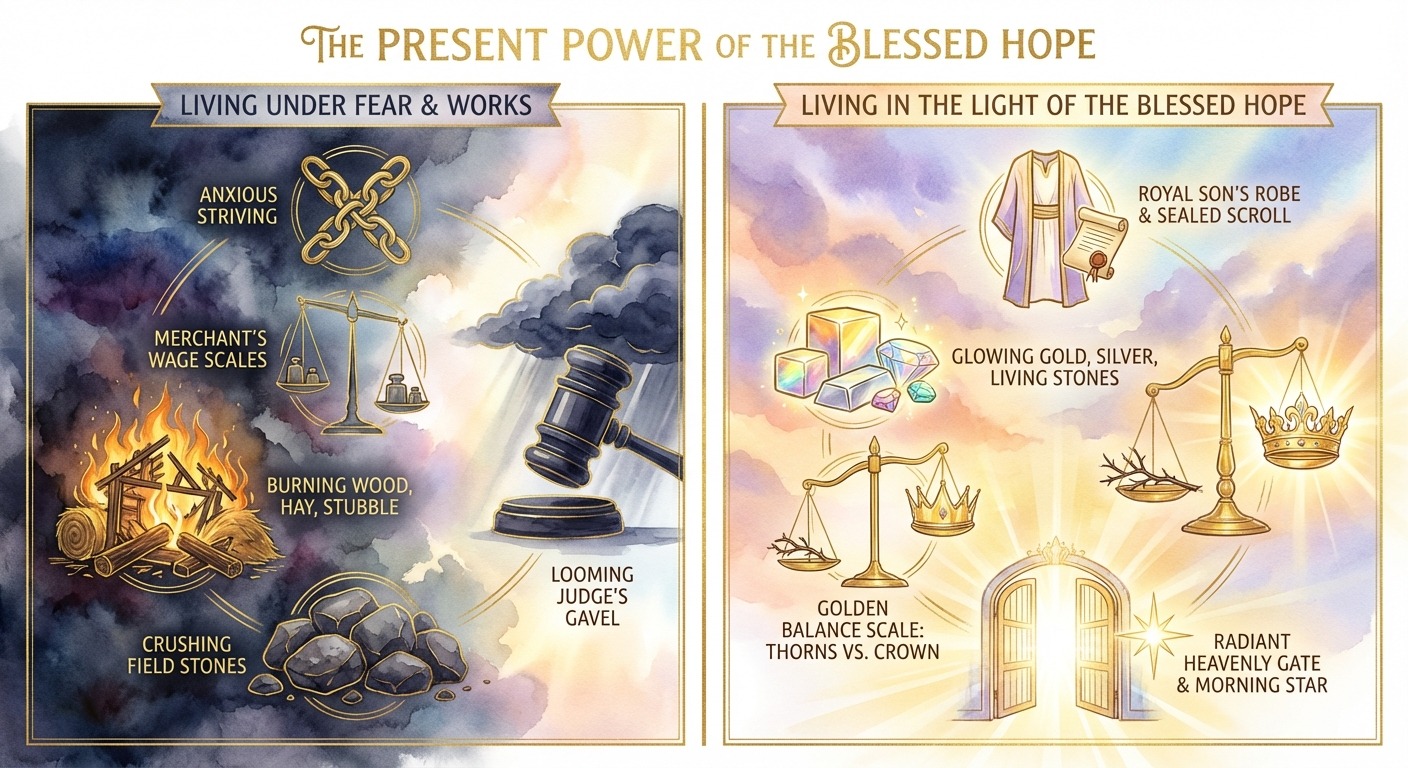
This chart shows the structure. What follows explains each part.
The Day of Christ is unified -- rapture and Bema as one coherent event, characterized by grace from first to last. But doctrine that does not transform is doctrine that has not yet landed. The blessed hope is not a piece of theological furniture to be admired; it is the animating conviction that Paul presents as the ground for freedom from fear, for discernment in ministry, for endurance through suffering, and for the simple, eager longing expressed in the last prayer of Scripture. This article asks what happens to a life when this hope is actually believed -- not assented to as a position, but received as a present reality that changes everything about how a person sees the present moment.
The Transformative Power of the Blessed Hope
A proper understanding of the rapture and the Bema Seat—the Day of Christ—does not merely shape our future expectation, but transforms how we live today. The blessed hope is not a distant doctrine to be shelved for prophetic debates; it is a present reality that liberates the believer from the tyranny of fear and the exhausting cycle of religious striving. When we see that our justification, sealing, and acceptance in the Beloved are already accomplished facts, our works cease to be anxious attempts to earn favor or avoid condemnation. Instead, our service becomes joyful participation in the unfolding of God's eternal purpose, the building of the New Jerusalem. This is the liberty of grace: not a wage slave laboring under the threat of loss, but a son rejoicing in the Father's house, confident in his inheritance.
A Safeguard Against False Ministry
This hope also serves as a safeguard against the allure of false ministry. The knowledge that the Bema will reveal and consume wood, hay, and stubble—those impressive but empty programs promoted by those who glory in appearance and not in heart—delivers us from the temptation to invest in what is perishable. We are not drawn to sensationalism, nor are we captivated by outward success or the charisma of those who bring "another Jesus" or "another gospel." Instead, we remain in the simplicity that is in Christ, discerning what has eternal value. We build with gold, silver, and precious stones—the life of Christ formed in believers, the fruit of true New Testament ministry—knowing that only what is wrought in Christ will endure the fire of the Day.
A Heavenly Perspective on Earthly Trials
The blessed hope also grants us a heavenly perspective on earthly trials. Paul writes, "For I reckon that the sufferings of this present time are not worthy to be compared with the glory which shall be revealed in us" (Romans 8:18). When we understand that glorification at the rapture and celebration at the Bema await us, the temporary afflictions of this life lose their power to crush us. These light afflictions, as Paul calls them, are "working for us a far more exceeding and eternal weight of glory" (2 Corinthians 4:17). We endure, not with grim determination, but with patient expectation. The knowledge of what God is building in us and through us—the masterpiece that will be unveiled on that Day—enables us to look beyond what is seen to what is eternal.
Filled with Eager Anticipation
Furthermore, this hope fills our hearts with eager anticipation, not anxious dread. The blessed hope is meant to be just that—blessed. When we see the rapture and the Bema as the culmination of grace, not a day of condemnation but of celebration, we find ourselves longing for Christ's appearing. Paul expresses this yearning: "For I am in a strait betwixt two, having a desire to depart, and to be with Christ; which is far better" (Philippians 1:23). This is echoed in the final prayer of Scripture: "Even so, come, Lord Jesus" (Revelation 22:20). The Day of Christ is not a threat hanging over the believer, but the consummation of every promise, the unveiling of God's masterpiece, and the moment of reunion with the One who loved us and gave Himself for us.
Summary: The Triumph of Grace
In summary, the blessed hope transforms our daily lives by:
- Freeing us from fear
- Protecting us from false ministry
- Granting us a heavenly perspective on suffering
- Filling us with joyful anticipation
We are not slaves laboring for a wage, but sons participating in the Father's purpose. We do not dread the Day of Christ, but eagerly await it, knowing that it is the day of our glorification and God's celebration. This is the liberty and comfort that flows from understanding the rapture and the Bema as the triumph of grace.
The blessed hope as a transforming force -- freeing from fear, guarding against false ministry, reframing suffering, and filling the heart with genuine anticipation -- is now established as the practical gift of the rapture doctrine. What remains is the most direct word of the entire book: not an argument but an exhortation, addressed personally to every reader who has followed the case this far.
Every chart in this series is free to explore online.
 Get the full chart set (PDF – $8)
Members get all PDFs included → Why Membership
Log in with an active membership to download printable PDFs on this site. Purchased on the shop? Access downloads from your shop account.
If you would like to help fund this work:
These charts are based on the following book:

Grace to Glory
Understanding the Rapture and What Happens Next - A vital restoration of this blessed hope doctrine with solid scriptural foundation.
View Related Book